Gold's 2026 standing: record demand value and a market that keeps finding buyers.
Gold enters the second half of 2026 in a structurally strong position. The World Gold Council's Gold Demand Trends report for the second quarter, published on 30 July 2026, put total demand including over-the-counter transactions at 1,269 tonnes, unchanged year on year, taking first-half demand to 2,522 tonnes and a record half-year value of US$380 billion. For a licensed producer such as Burlcore Mining, that combination of volume stability and record value is the clearest signal available of a market with durable underlying appetite.
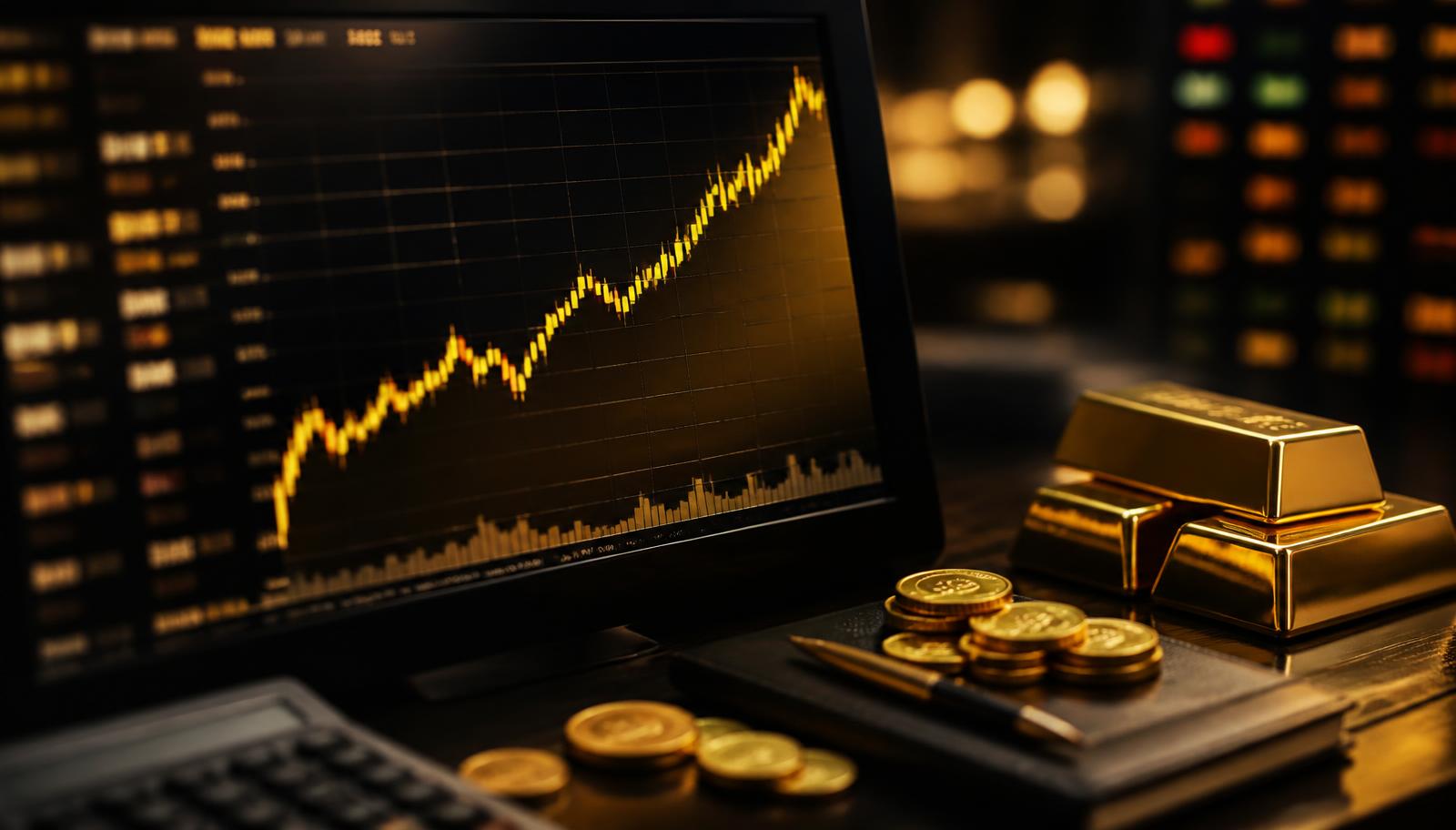
The Financial Times opened the year reporting that gold was tipped to extend its record-breaking rally into 2026, and the data since has largely validated that framing. Even through a second quarter in which prices eased from January's highs, buyers did not leave the market. They rotated. Exchange-traded funds saw moderate outflows of 45 tonnes, while bar and coin investment held steady at 307 tonnes and central banks bought a further 289 tonnes.
That rotation matters more than the headline price. When a price correction is met by official-sector accumulation rather than a broad exit, it tells you the buyer base has changed character. Reserve managers and long-horizon savers are not trading a momentum signal; they are building a position in an asset that carries no counterparty and no issuer.
Sell-side forecasts have moved with that logic. Reuters reported in February 2026 that a poll of 30 analysts and traders returned a median 2026 forecast of US$4,746.50 per troy ounce, the highest annual figure the survey had produced. By the April poll, that median had been raised to an expected 2026 average of US$4,916, with analysts pointing to strong central bank demand and economic uncertainty. J.P. Morgan lifted its long-term forecast by 15 per cent to US$4,500 an ounce in February while holding a US$6,300 year-end 2026 view, and Goldman Sachs raised its December 2026 target to US$5,400 from US$4,900. The London Bullion Market Association's annual forecast survey put the projected high for the year as far as US$7,150.
None of these numbers should be read as a promise. They are, collectively, a statement about direction of travel: the institutions closest to the market have spent 2026 revising their gold assumptions upwards, not downwards.